



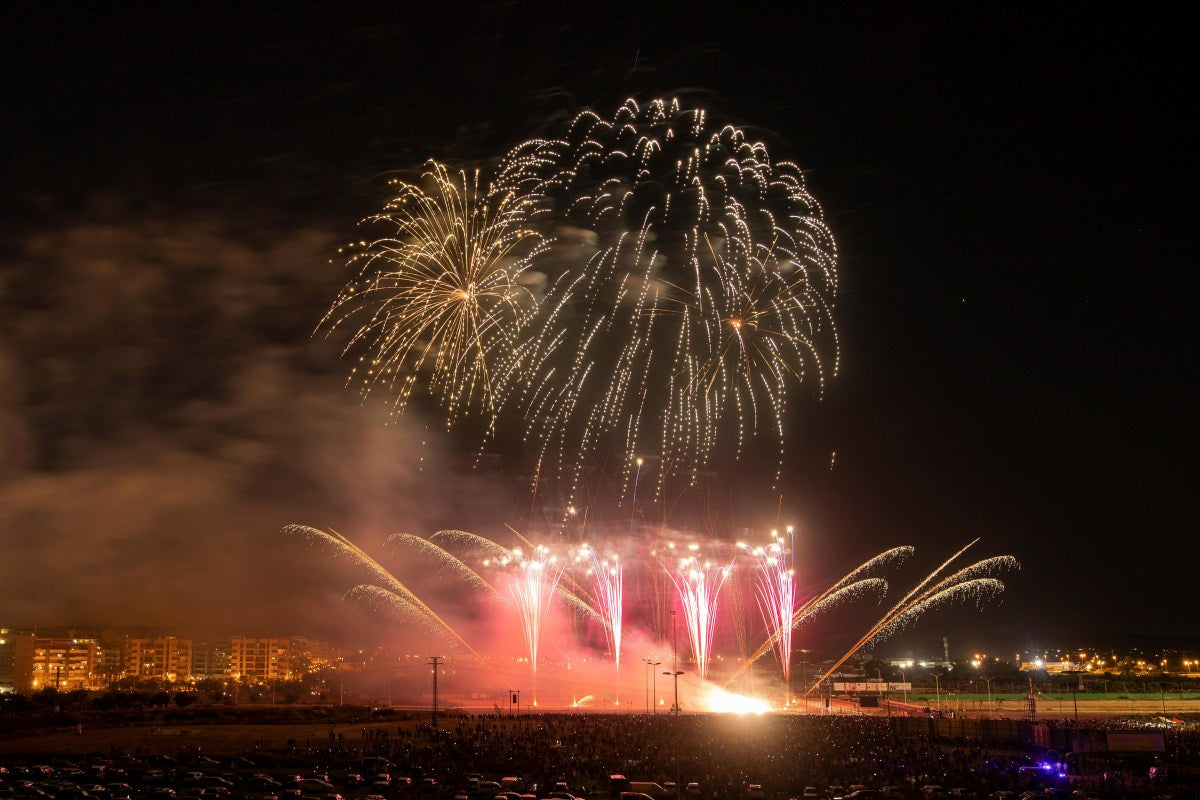
If you have ever watched a finale light up your whole neighborhood and thought, can you see fireworks from space, you are not alone.
The idea feels right. Fireworks are loud, bright, and built to dominate the sky, so surely they must glow like beacons from orbit.
Here is the real story. Let's break down what astronauts actually see, what conditions help a show stand out, and why the biggest bursts on Earth still look tiny from up there.
What this article covers:
- Quick Answer: Can You See Fireworks From Space?
- Why “Space View” Makes Fireworks Look Like Nothing
- What Astronauts Actually Describe Seeing
- Don't Confuse Fireworks With “Space Fireworks”
- Frequently Asked Questions
Quick Answer: Can You See Fireworks From Space?
The answer is mostly “no,” with a small, fascinating asterisk that depends on scale and viewing conditions.
Most fireworks are not visible to the naked eye from space. From low Earth orbit, like the International Space Station, even large bursts are tiny compared to the steady glow of city lights, and they last only seconds.
In rare cases, astronauts have reported noticing faint, flickery sparkles from huge, dense, coordinated shows, but they look like pinpricks, not blooming chrysanthemums.
Why “Space View” Makes Fireworks Look Like Nothing
This question sticks because fireworks feel enormous on the ground. From orbit, the rules change, and the same show that shakes your chest can fade into the glow of a whole planet.

Distance Shrinks Everything Fast
The space station orbits around 250 miles up, which is close in space terms but wild in human terms. From that height, even the biggest shells become a tiny flash on a huge canvas of Earth below.
Even when you know how high do fireworks go, the tallest professional shells still burst at heights that look microscopic from 250 miles up.
City Lights Outshine Short Bursts
A firework burst is bright but brief, usually a couple of seconds of glory. Cities never stop glowing, so their light forms a constant background that overwhelms short flashes unless the show is truly massive.
The Atmosphere Softens The Light
Light from fireworks has to punch through miles of air before it reaches orbit. Haze, humidity, smoke, and layered air scatter that light, so what looks razor sharp on the ground looks muted from above.
What Astronauts Actually Describe Seeing
Astronaut comments about fireworks are rare, but they are clear about the vibe. They do not see a crisp backyard show the way you do; they see a subtle sparkle tucked into the city glow.
Tiny, Momentary Flickers
Astronauts describe fireworks as brief pinpricks of light rather than detailed shapes. Even a major display lasts only seconds per burst, so what reaches orbit is a quick sparkle that can be easy to miss if you are not looking at just the right moment.

Only Noticeable Over Very Dark Backdrops
Fireworks have the best chance of standing out when the ground below is relatively dark.
Over brightly lit downtowns, the steady glow of streets and buildings overwhelms short, small flashes, so the fireworks blend into the background.
Over darker coastlines or smaller cities, that contrast improves, and the flicker is easier to pick out.
Repetition Helps
A single break is easy to miss from a fast-moving orbiting platform. Longer shows with repeated bursts create more opportunities for those tiny flashes to line up with an astronaut's view during a pass, which is why sustained, coordinated displays are the ones most likely to be noticed at all.
Don't Confuse Fireworks With “Space Fireworks”
Some of the most dramatic ‘fireworks-like' images from orbit aren't fireworks at all; they're natural light events in Earth's upper atmosphere.
Sprites And Upper-Atmosphere Flashes
Sprites are lightning-driven events that erupt high above storms and look like red jellyfish or branching fireworks from orbit. Astronauts photograph them because they are huge, atmospheric, and last long enough to catch on camera.
Aurora And Other Night-Sky Events
Auroras, airglow, and other upper-atmosphere light phenomena can fill hundreds of miles of sky. They are spectacular from space, but they come from solar particles and Earth's magnetic field, not from a mortar tube on the ground.

Frequently Asked Questions
Can Astronauts See New Year's Fireworks From The ISS?
Sometimes, but only as faint sparkles if the show is enormous and conditions help. Astronauts do not see full shapes or colors the way people on the ground do.
Why Do Fireworks Disappear Against City Lights From Orbit?
Because city lights glow constantly and cover huge areas. A firework flash is brief and small, so it blends into the brighter, steadier background.
Can You See Fireworks From The Moon?
No. The Moon is about 238,900 miles away, far beyond any fireworks' brightness or size. Even the biggest Earth shows vanish long before that distance.
Do Drone Light Shows Show Up Better From Space Than Fireworks?
No, not really. Drones are also small and close to the ground, so they face the same distance and contrast problems. They look incredible from a field or rooftop, not from orbit.
What's The Brightest Human-Made Thing Astronauts Can See At Night?
City networks, major wildfires, and large fishing fleets are among the most visible night lights from orbit. Fireworks do not compete with those in scale or duration.
Conclusion
Can you see fireworks from space? Almost never with the naked eye, except for rare, faint flickers from huge shows seen from low Earth orbit.
Fireworks are powerful on the ground because they are designed for human scale, human sightlines, and human emotion, not for satellites flying overhead.
At Red Apple® Fireworks, we build that ground-level magic with intention. We design, test, and package our own fireworks so every break hits hard and every color pops the way it should.
If you want a show worthy of a holiday crowd, stack your pace with premium cake fireworks, punch up your peaks with mortar fireworks, and finish with a heart-thumping finale fireworks.
Ready to learn more about fireworks? Check out these articles:


Leave a comment
All comments are moderated before being published.
This site is protected by hCaptcha and the hCaptcha Privacy Policy and Terms of Service apply.