



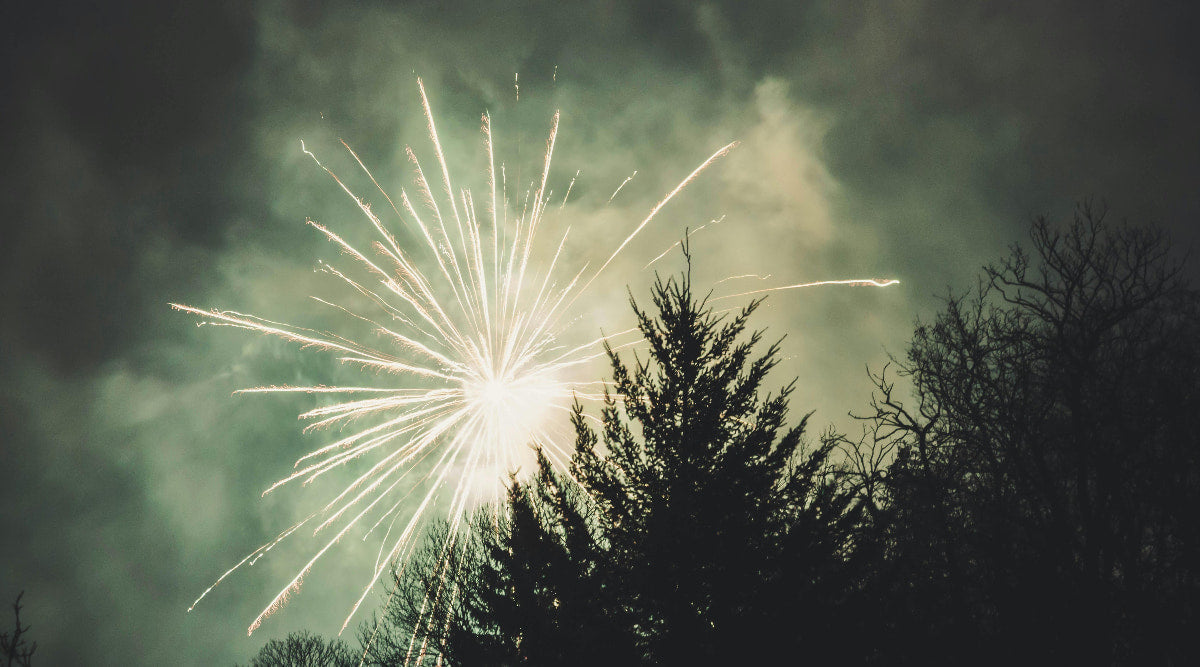
Fireworks have a way of pulling your eyes up even when they are miles away, and how far can you see fireworks is a question that matters when you are choosing a viewing spot or deciding if that distant glow is worth the drive.
The short answer is that aerial fireworks travel visually farther than most people expect, but the sky, the terrain, and the size of the show decide where the limit really lands.
What this article covers:
- Quick Answer: Typical Visibility Range
- What Limits How Far You Can See Fireworks In The First Place
- Visibility By Firework Scale
- Conditions That Stretch Or Shrink Visibility
- Frequently Asked Questions
Quick Answer: Typical Visibility Range
In clear conditions, most aerial consumer fireworks are visible from about 2 to 5 miles, and big public-display shells can often be seen 5 to 10 miles or more.
Higher burst height and stronger star brightness stretch that range, while haze, low clouds, terrain, and city glow shorten it. Ground effects rarely carry that far, even when they look wild up close.
What Limits How Far You Can See Fireworks In The First Place
Fireworks visibility follows simple line-of-sight rules. Even the brightest shell cannot beat the horizon, and the air between you and the burst matters more than people think.
The Curve Of The Earth
At some distance, the horizon blocks your view. Flat land lets you see farther than rolling hills, and any elevation you gain extends your line of sight. That is why a show can suddenly pop into view when you crest a hill on the highway.

Burst Height Versus Your Horizon
Height is your visibility booster. A shell that breaks high stays above rooftops, trees, and terrain longer, so you can still see the full bloom from miles away. That is also why questions like how high do fireworks go matter for distance watching, because higher breaks stay visible over more ground.
Light Has To Travel Through Real Air
Light moves fast, but it still has to cross real air full of moisture, smoke, dust, and haze. Every mile gives those particles more chances to scatter the glow, so contrast drops with distance. On a crisp, dry night, fireworks stay sharp a lot farther out.
Visibility By Firework Scale
Not every firework is meant for long-range viewing. Size and product class change height, brightness, and spread, and those three things decide whether a burst holds up at 5 miles or fades at 2.
Small Consumer Aerials
Small aerial items look great nearby, but they soften fast at range unless they repeat. One quick shot may register as a flash without a full pattern, while a steady series keeps your eyes locked and makes the show readable from farther away.
Large Consumer Cakes And Mortars
This is the backyard sweet spot for distance visibility. Multi-shot cake fireworks and reloadable mortar fireworks break higher and burn brighter, so they often stay clear from several miles out when the sky is dark. If you want your show to travel visually, this class does the heavy lifting.

Professional Display Shells
Pro shells dominate distance. They rise higher, spread wider, and throw bigger star loads, so they hold visibility the farthest. That is why you can catch a city or stadium show from the edge of town, and sometimes from much farther if the night is clear.
Ground And Low-Level Effects
Ground fireworks are built for close-up impact, not horizon watching. Ground fireworks and fountain fireworks usually top out low and stay local. From miles away, they disappear, even though they can be show-stealers in your driveway.
Conditions That Stretch Or Shrink Visibility
A great lineup still needs a great sky. These conditions decide whether your view is full color blooms or faint flashes.
- Sky clarity: fog, smoke, or humidity cuts contrast fast.
- Cloud base: low clouds block shape, even if you still see bright pulses.
- Light pollution: strong city glow washes out distant color.
- Terrain: hills, trees, and tall buildings hide lower breaks.
- Viewing elevation: rooftops and hills extend your horizon.
This is why can you see fireworks from 4 miles away can be an easy “yes” on one night and a frustrating “maybe” on another. Distance stays the same, but the air and background do not.

Frequently Asked Questions
How Far Can You See Backyard Fireworks?
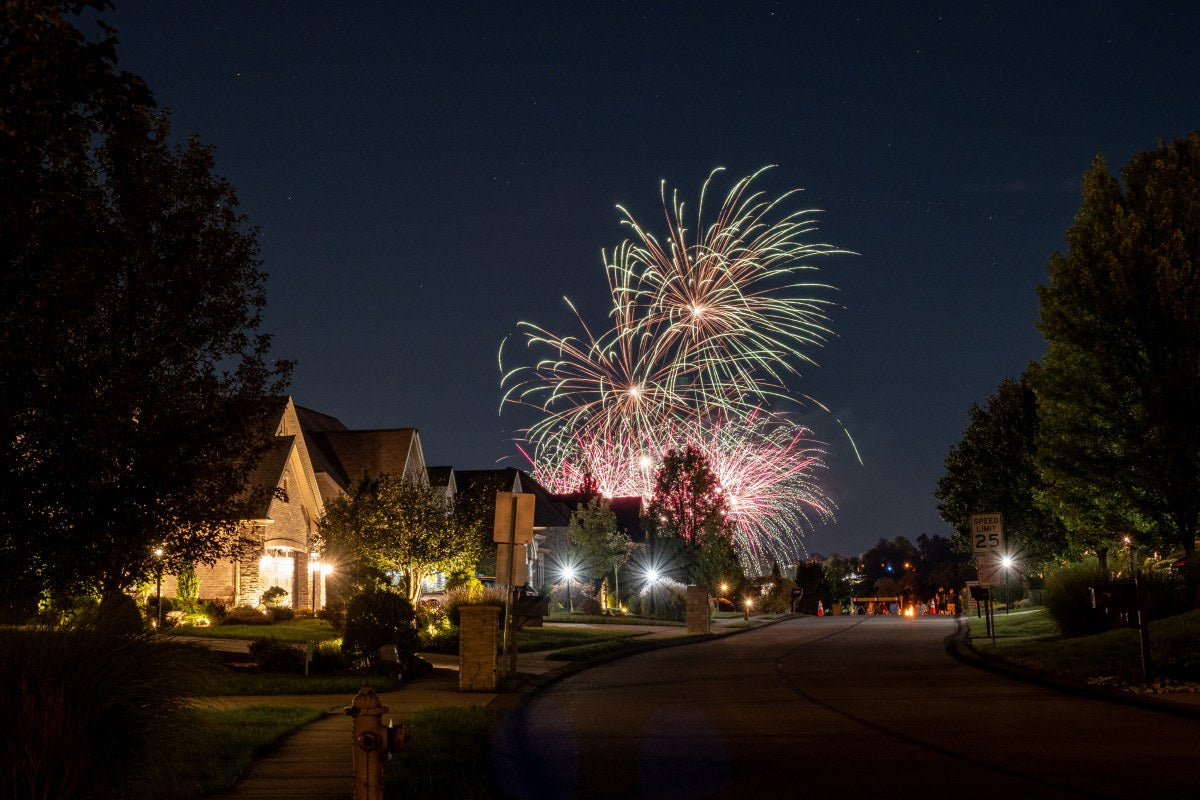
Most backyard aerial fireworks are visible from about 2 to 5 miles on a clear night, especially if they repeat and break high. Ground effects usually do not show past the immediate neighborhood.
Can You See Fireworks From 10 Miles Away?
Yes, if the show is large and the sky is clear. Professional displays and big coordinated consumer finales are the most likely to stay visible at 10 miles.
Do Higher Fireworks Always Look Brighter From Far Away?
Higher breaks usually look brighter because they stay above obstacles and haze. Still, star composition and effect style matter, so two equally high shells can look different at range.
Conclusion
Most aerial fireworks are visible from a few miles, and big public shows often carry 5 to 10 miles or more when conditions allow.
How far you can see fireworks comes down to height, brightness, and the clarity of the night between you and the burst.
At Red Apple® Fireworks, we build for that full-sky impact because we design, test, and package our own fireworks.
If you want a show that reads beautifully from near or far, lean into high-performing aerial fireworks, stack your pacing with bold cake fireworks, and close with sky-filling finale fireworks.
Pick a clear, dark vantage point, give the launch site space, and enjoy the full-sky view safely.
Ready to learn more about fireworks? Check out these articles:


Leave a comment
All comments are moderated before being published.
This site is protected by hCaptcha and the hCaptcha Privacy Policy and Terms of Service apply.